Uncategorized

You Won’t Need These…” — German POW Women Froze When Cowboys Removed Their Chains.H

Chapter 1: The Cut That Shouldn’t Have Happened

Texas, 1944. The sun sat high over Camp Hearne like a watchful eye that never blinked, bleaching the guard towers, hardening the dirt, and turning the wire fences into thin lines of fire. A dozen German women stood near the corral, bareheaded and silent, squinting into the glare. Their wrists were linked in groups of four, chain against skin, chain against bone, the metal worn smooth by weeks of movement and misery. They had expected this part to last. Chains were not just security; chains were a statement. They said: you are dangerous, you are defeated, you are no longer yourself.
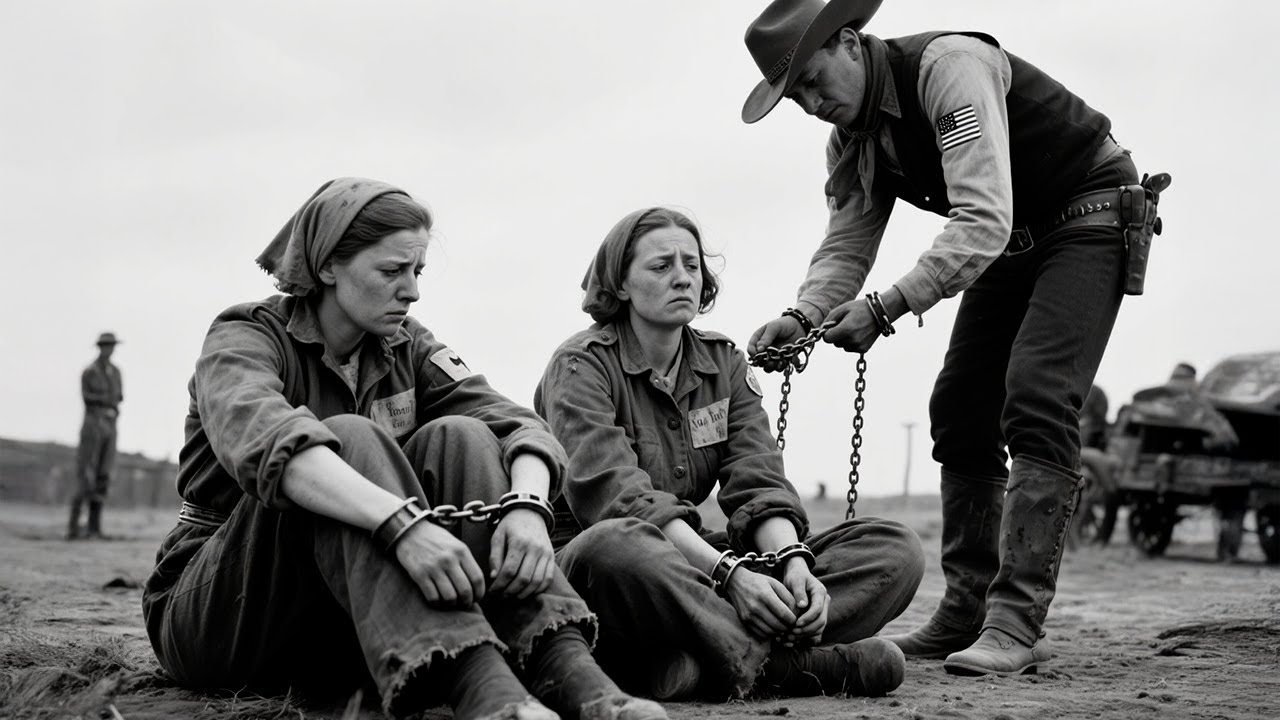
Then a rancher stepped forward with bolt cutters in his weathered hands.

Jack Morrison looked like the land had shaped him—lean, sunburned, carved by wind and work. He wore denim and an old hat, and his eyes carried the calm authority of a man who had spent his life solving practical problems that didn’t care about opinions. Beside him stood Wilhelm Fischer, a German-American interpreter from Fredericksburg, a bridge between languages and, in this moment, between worlds.

Morrison’s gaze moved over the women, then down to the chains. He said something to the camp officer in a tone that was not pleading and not polite. Fischer hesitated, then translated carefully, as if the meaning itself were dangerous: “Mr. Morrison says those chains are foolish. He says if you want these women working with livestock, you don’t bring them in restraints that can catch on a gate or a hoof. He won’t take them to his ranch in chains.”

The officer’s face tightened. Protocol argued for the chains. Habit argued for the chains. Fear—always fear—argued for the chains. But labor shortages argued back, and Morrison had leverage the officer could not ignore. A nod was given. A guard came forward with keys. The lock clicked, metal shifted, and the chain that linked Greta Hoffman to the woman beside her fell away with a heavy sound on concrete.

It was louder than it should have been. It sounded like a door closing on one life and opening on another.

Greta stared at her wrists. Red grooves marked her skin, as if her body had learned the shape of captivity. She lifted her arms in disbelief—an absurd, private gesture that felt almost sinful. Freedom, even a small freedom, made her dizzy. She wanted to believe it was a trick, some cruel game to soften them before punishment resumed. Yet Morrison stood there with bolt cutters as if nothing about this was extraordinary.

Then he added a sentence Fischer translated with visible uncertainty, as though he couldn’t decide whether it should be said aloud at all: “He says you don’t need this here. On his ranch, you’re people first.”

People first. Prisoners second. Greta felt something shift in her chest, like a hidden latch moving. She had been taught the enemy was a machine of cruelty, a country made of greed and brutality. Yet an American rancher had just overruled a military system because chains were wrong for the work—and, somehow, wrong for the soul.

In the distance, horses stamped in the dust, impatient and alive. The women had expected shackles. Instead, they had found saddles waiting like a riddle.

Chapter 2: The Chains and the Sea

Greta Hoffman had been twenty-three when she became a prisoner. She had served in the Luftwaffe as a communications specialist, not a pilot, not a frontline soldier, but a woman seated at radios and signal boards at an airfield outside Berlin, relaying voices across invisible distances. When Allied forces swept through in spring 1944, her unit was captured intact, a neat victory on paper: dozens of women transformed instantly from personnel into prisoners, from purposeful to expendable.

The processing center in France had been the first shock. Their uniforms were removed. Their identities were reduced to numbers. They were herded into groups and chained at the wrists—four at a time—as if the chain itself could prevent escape, sabotage, resistance, the entire catalogue of fears officials carried in their heads. Greta was linked to three strangers: Lisel, a nurse from Hamburg with hollow eyes; Margareti, an aircraft mechanic from Munich who hummed folk songs when anxious; and Ingrid, another radio operator whose name Greta had trouble pronouncing and whose face held a persistent, secret nausea.

The chain forced intimacy. It made privacy impossible, turned every movement into negotiation. When one woman stood, the others felt the pull. When one woke at night, the chain shifted and woke the rest. Greta learned to read their breathing, to anticipate their motions, to measure her own body against the needs of three others. It was humiliating, and yet it also built a quiet solidarity that didn’t exist before the metal linked them. Shared helplessness can become a kind of language.

The Atlantic crossing lasted three weeks. The women were kept below deck in a stale hold where air and fear grew thick together. Seasickness swept through the group like a plague. The chains remained even for the latrine, even for sleep, even during the brief daily hour when they were allowed on deck for fresh air. In that hour, Greta would lift her face to the wind and stare at the horizon, trying to understand how something so immense could be crossed by anything as fragile as a ship.

Mid-voyage, an American medic noticed what Ingrid couldn’t hide. A medical inspection turned into a murmured discussion in English, then a decision. Ingrid was pregnant—only a couple of months, not yet visible, but undeniable to trained eyes. The camp staff gave her extra rations and vitamins, not because they trusted her, but because they recognized the child as separate from the war.

That mercy confused Greta more than cruelty would have. Propaganda had prepared her for brutality. It had not prepared her for an enemy who cared about an unborn life. The contradiction lodged in her mind like a grain of sand under eyelid—small, constant, irritating, impossible to ignore. If Americans could show mercy where it cost them nothing, what else had been lied about? And if this was a lie, how many others were stacked beneath it?

In June 1944, they arrived in New York Harbor. Greta saw towers of steel and glass rising like something unreal, a city that looked nothing like the broken, decadent wasteland she had been promised. They traveled by train across a vast country, the chains still binding them as if distance itself were dangerous. By the time Texas arrived, heat pressed through open windows like breath, and the metal had left grooves in Greta’s wrists.

Then Camp Hearne. Then Morrison. Then bolt cutters. And suddenly the chains were gone, leaving only the memory of their weight—a memory that clung tighter than metal ever had.
Chapter 3: The Ranch That Felt Like a Secret

Morrison Ranch lay twelve miles southwest of the camp, a sweep of land so wide that cattle looked like scattered stones. The main house was white with a wide porch, shaded by old oaks. Barns and corrals clustered nearby, red paint faded into sun-silvered wood. It should have looked ordinary. Yet to Greta, it felt like a place outside the war’s logic, a pocket of reality that refused to behave the way she had been warned.

On the first day, Morrison introduced his foreman, Tom Rawlings, a lean man in his fifties who had the quiet, unshakable manner of someone who had seen enough seasons to stop being impressed by drama. The workforce was thin—older men and teenagers, because the men of prime working age were overseas or in defense plants. The ranch needed hands more than it needed hatred.

The German women were divided into work groups. Some went to the vegetable garden. Ingrid, because of her pregnancy, was assigned there with lighter duty. Greta, Lisel, and Margareti were sent to livestock work: feeding, watering, checking fence lines, hauling hay, learning to move around cattle without startling them. Morrison demonstrated quickly, using gestures and a few words through Fischer. His teaching style was blunt but not cruel. It was the instruction of a man who wanted the job done safely and correctly, because unsafe work wasn’t heroic—it was expensive.

Greta’s back ached by midmorning. Her hands blistered under borrowed gloves too large for her fingers. Sweat soaked her dress until it clung in uncomfortable places. Yet the pain had a strange purity. This was honest exhaustion, the kind that came from effort rather than fear. And always, behind every movement, there was the awareness: I am not chained.

At noon, Mrs. Morrison brought lunch—sandwiches, fruit, and pitchers of lemonade cold enough to sting the teeth. She served without speeches. Yet there was respect in her small gestures: placing plates instead of dropping them, returning with more lemonade when the first pitcher emptied, making sure each woman had enough. Kindness delivered quietly can feel more real than kindness announced.

“This is strange,” Margareti murmured in German as they ate in the shade.

“Like we’re just workers,” Lisel replied, voice low, as if afraid to speak too loudly and break the illusion.

Greta watched the ranch hands nearby, men who didn’t stare at them with hatred, only with the cautious curiosity reserved for any new worker. “Maybe here,” she said slowly, “the war is somewhere else.”

The idea was both simple and unsettling: that enemy status could become secondary in the face of daily life. That a fence needed mending regardless of who held the hammer. That cattle needed water regardless of flags.

That afternoon, Morrison brought them into the barn for a different task. An orphan calf lay in straw, awkward and weak, its mother dead from birth complications. It needed bottle-feeding every few hours. Morrison asked for volunteers, and Greta raised her hand before she fully understood why.

He showed her how to mix formula, how to hold the bottle at the right angle, how to be patient while the calf learned to drink. The calf latched on with desperate force, milk disappearing quickly, its tail twitching with relief. Greta felt tenderness rise in her like a surprise. She had never thought of herself as maternal. She had been a radio woman, a technician, a person of systems and signals. Yet here was a small life that needed her steady hand.

When the calf finished, it looked at her with wide, unjudging eyes. There was no propaganda in that gaze, no politics, no accusation—only the simple truth of an animal recognizing the one who fed it.

Morrison watched from the doorway and said something that Fischer translated with a hint of amusement: “That calf will remember you. You’ll be its person now.”

Its person. Not prisoner. Not enemy. Not number. Greta felt that hidden latch inside her click again, opening further.

Chapter 4: The Horse Named Patience

Weeks turned into routine: mornings at the ranch, evenings back behind wire. The work was hard, but it gave the women something captivity usually stole—purpose. The ranch hands began using names instead of numbers. Lisel became “the one with medical training” when someone sliced a hand on barbed wire. Margareti became “the mechanic” when a tractor coughed and refused to start. Greta became “the one who feeds the calf,” as if that were her true rank.

Her English improved because it had to. She learned ranch words fast: corral, pasture, gate, feed, water. Language, she discovered, was less about grammar than about need. You learned what you needed to keep the work moving, to keep the animals calm, to keep yourself safe. She learned Tom Rawlings’s slow drawl and the difference between Morrison’s tone when he was correcting versus when he was joking.

Then, one morning, the ranch needed cattle moved between pastures. The usual hands were busy elsewhere. Morrison looked at Greta, noting how she moved among the herd without fear, and asked a question through Fischer: “You ever ride a horse?”

“No,” Greta admitted.

“Want to learn?”

The question hit her like a gust of fresh air. Riding represented a kind of freedom that even the removal of chains hadn’t fully delivered. A horse meant distance, speed, the feeling of moving under one’s own direction across open land. It meant, in Greta’s mind, the opposite of captivity.

Morrison started her on an old mare named Patience, a name that sounded like a test. Patience was calm, forgiving, and stubborn in the way of animals that have survived many inexperienced hands. Morrison taught Greta to mount, to sit, to hold reins without fighting them, to communicate with weight and pressure rather than force. The first ride was terrifying—the height, the movement, the awareness that the animal beneath her could decide to disagree. But Patience moved steadily, as if she understood the fear and chose not to punish it.

By the third lesson, Greta could walk without panic. By the fifth, she could trot, stiff and determined. By the tenth, Morrison trusted her enough to do simple cattle work, moving small groups through gates while Tom handled the rest. Some ranch hands muttered about prisoners and horses, about trust and risk. Morrison shut it down with the same practical certainty that had removed the chains. If she could do the work, she did the work.

On horseback, Greta felt something almost mystical—not magic in the childish sense, but the strange, adult magic of becoming someone new. She was not the girl at a Berlin radio table anymore. She was a woman under a wide Texas sky, guiding a living animal with steady hands, moving cattle with competence earned in sweat.

At night back in the barracks, she lay awake and tried to understand how captivity had led her here. The question felt like a ghost in the room: If the enemy could give you something that felt like life, what did that say about the war?
Chapter 5: The Sentence That Haunted Her

One afternoon, while Greta worked a difficult gate, Tom Rawlings watched her quietly and then said, “You got a feel for this. Most folks need years to learn what you picked up in weeks.”

Greta shrugged, embarrassed by praise. “I grew up in Berlin,” she said. “No animals.”

Tom’s eyebrows lifted slightly. Berlin. He rolled the word in his mouth as if tasting it. “That’s a big city.”

“Very big.”

He was quiet a moment, then asked, not accusing, simply curious: “What brought you to Texas?”

“The war,” Greta replied, as if the word explained everything.

Tom nodded slowly. “Suppose that’s true for most folks these days.” He spat dust to the side and added, almost to himself, “War’s a stupid way to run a world. Takes people who could be doing good work and makes them do violence instead.”

The sentence followed Greta back to camp. It followed her into sleep. It wasn’t a political argument. It was a simple truth spoken by a man who repaired fences for a living. That made it harder to dismiss. In Germany, ideology had been loud. Here, wisdom arrived quietly, sometimes over a gate latch, sometimes over a bottle of formula.

In September, Morrison gathered the women in the barn. Dust motes drifted in slanted light. Fischer translated as Morrison spoke. He said he had doubted this program at first—doubted prisoners would work honestly without chains, doubted Germans would accept American direction, doubted whether respect could replace fear. He said they had proved something important: that most people respond to fair treatment with fair effort, that chains were not necessary for good work, only respect and clear rules.

Then he said the sentence again, the one that had become the ranch’s secret doctrine: “You’re people first.”

Greta felt her throat tighten. She refused to cry. She had survived too much humiliation to offer tears easily. Yet inside, something trembled. “People first” was not merely comfort. It was an accusation against every system that had reduced her to category and function. It forced her to look back at her own country’s habits of classification and hate, and to realize how fragile those habits were when confronted with ordinary decency.

That night, the women talked late. Some insisted kindness was manipulation. Some admitted it felt real. Lisel said quietly, “If they don’t chain us, they don’t fear us. If they don’t fear us… what does that mean about what we were told?”

Greta had no answer, only the growing suspicion that propaganda required distance, and that the ranch had destroyed distance.

Chapter 6: What She Carried Back to Ruins

Germany surrendered in May 1945. The news reached Camp Hearne through formal announcements. Some prisoners wept with relief. Some stared as if their eyes had stopped working. Greta felt oddly numb. The war had become distant while she fed calves and learned to ride. Its end mattered, but it did not change the fence line in front of her. She was still a prisoner in Texas.

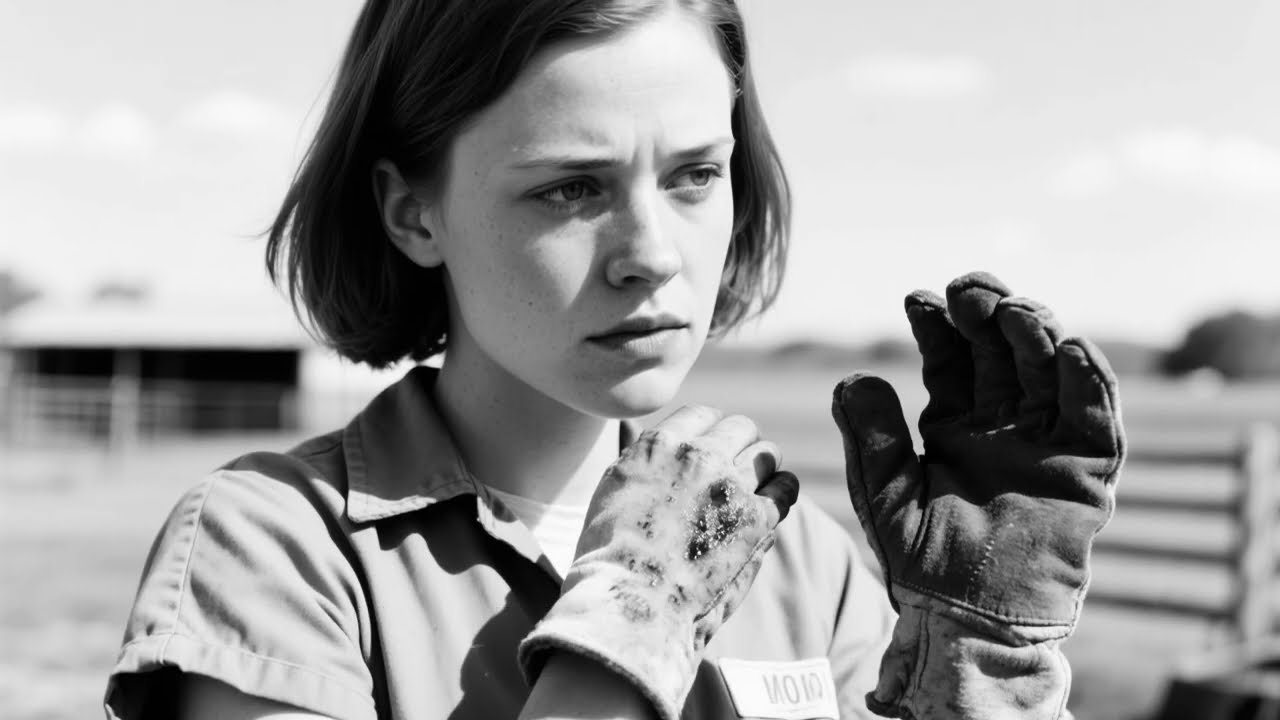
Repatriation came later—slow, bureaucratic, heavy with paperwork. Before the women left, Morrison held a meal for them: barbecue, potato salad, pie, generous portions that felt almost unreal to people who had watched Europe starve. He spoke briefly, Fischer translating. He said they had done good work and would be missed. He said he hoped they would remember Texas fairly. He gave each woman a pair of work gloves and a handwritten note.

Greta’s note included one extra line: “A cowgirl always has a place on this ranch.”

In August 1945, Greta returned to Germany and found a country that looked like it had been chewed and spit out by history. Hamburg was rubble. Berlin was worse, a broken landscape of twisted steel and hollow windows. Her apartment building was gone. Her parents had died in an air raid, buried in a mass grave with hundreds of others. She was twenty-four and alone in a ruined city full of other people who were also alone.

Yet Greta carried something back with her that many did not. She carried strength built in Texas heat, calluses on her hands, the memory of open land and honest work. More than that, she carried a sentence that refused to die: you’re people first. It became a kind of compass when everything else was gone. She found reconstruction work—hauling rubble, clearing streets—labor that felt brutal but familiar. Her body could handle it. Her mind could handle it. She had learned, on a ranch in enemy country, that endurance could be built like muscle.

Years later, she met Lisel again in a Berlin bread line. They recognized each other instantly, as if chains still connected them. They spoke of Texas the way one speaks of a strange dream that turned out to be real. “I remember the moment the chains came off,” Lisel said. “Like someone gave back something they’d stolen from us.”

Greta nodded. “Not just freedom,” she said. “Dignity.”

She lived long enough to see Germany rebuild, to see division and reunification, to watch a ruined city become modern again. She never forgot Morrison. She kept the gloves long after they were useless, kept his letters, kept a photograph of herself on horseback under a merciless sun, a slight smile on her face as if she still couldn’t believe the transformation.

On the back of that photograph, in Morrison’s handwriting, were words that sounded like a riddle and a prayer at once: “Greta Vöber, cowgirl.”

If anyone asked her what she learned as a prisoner in Texas, she did not begin with misery. She began with bolt cutters. With the heavy clatter of chains on concrete. With the unnerving, almost mystical truth that a war could label people as enemies, but a single decent man could look at them and say, simply, that the chains were not necessary here.

And sometimes, she would add, that is how the darkest stories change—not by grand speeches, but by small acts of courage that refuse to let fear do the thinking.

LEAVE A RESPONSE

Your email address will not be published. Required fields are marked *

Uncategorized

February 9th, 1944. North Atlantic, 300 miles southwest of Iceland. The sea was running heavy, gray swells capped with white foam stretching to every horizon. Aboard HMS Starling, a black swanass sloop cutting through the dark water. Captain Frederick John Walker stood on the bridge, binoculars pressed to his eyes, scanning the empty ocean. His crew called him Johnny. The yubot crews who survived encounters with him had other names. In the past nine days, Walker’s second support group had already sunk three German submarines. Today, they would sink three more in a single 15-hour period using tactics the Admiral T had banned for 2 years. modifications Walker had developed in secret against direct orders because he knew the standard methods were killing his men while letting Ubot escape. The numbers told a brutal story. Between January 1942 and December that same year, Royal Navy depth charge attacks achieved a 4% kill rate. 4%. For every hundred attacks, 96 yubot escaped to sink more merchant ships, more tankers, more men. The mathematics were simple and devastating. Britain was losing the Battle of the Atlantic not because her sailors lacked courage, but because her weapons were designed for the wrong war. Before we continue with How One Man Changed Everything, make sure to hit that like button and subscribe to the channel. Your support helps us bring these untold stories to light. Walker had spent 20 years thinking about this problem. 20 years as a passed over commander, stuck in shore postings while younger officers got the sea commands he craved. The admiral considered him difficult, too theoretical, too willing to question doctrine. They were right about all of it. While other officers focused on seammanship and tradition, Walker filled notebooks with calculations, probability matrices, and depth charge blast radius equations. His colleagues thought he was wasting his time. The Ubot crews would eventually learn otherwise. The problem was straightforward. Type 7 Ubot, the backbone of Germany’s submarine fleet, could dive to 230 m, roughly 750 ft when pursued. British Mark III depth charges, standard issue since the First World War, could only be set to detonate at 150 or 300 ft. Do the mathematics. A Yubot captain hearing the distinctive sound of a destroyer’s propellers overhead, had a simple survival protocol. dive deep, dive fast, go silent, and wait. The depth charges would explode harmlessly above them. The destroyer would lose sonar contact in the turbulence, and the yubot would slip away. Walker first proposed his solution in September 1941 during a tactical conference at Western Approaches Command in Liverpool. The room was full of senior officers, men with twice his experience and three times his rank. He stood at the front with a pointer and a diagram showing yubot escape profiles, dive angles, and detonation depths. His proposal was simple. Modify the Mark 7th depth charges to detonate at 400, 500, even 600 ft. Attack in coordinated patterns that would catch yubot at multiple depths simultaneously. Use slower approach speeds to maintain sonar contact longer. The response was immediate and hostile. Rear Admiral commanding the conference called the idea unsafe. The depth charge casings were not rated for pressures at 600 ft. They might detonate prematurely, damaging the attacking vessel. Worse, they might not detonate at all, wasting precious explosives. Another officer pointed out that modifying depth charge fuses without Admiral Ty approval violated standing weapons protocols. A third noted that Walker’s proposed attack patterns would require twice as many depth charges per attack, cutting the number of attacks possible before returning to port to rearm. Walker tried to counter with his calculations. The blast radius of a Mark 7 charge at 600 ft would still be lethal within 20 ft of a Yubot’s pressure hull. The risk of premature detonation was minimal if the modifications were done correctly. Yes, they would use more charges per attack, but the kill rate would more than compensate. The senior officers were not interested in theory. They wanted proven methods, tested weapons, established doctrine. The Admiral T had been fighting submarines since 1914. If deeper depth charges were necessary, someone would have developed them already. Walker left that meeting knowing two things. First, he was right. Second, no one with the authority to change anything was going to listen to him. So, he stopped asking for permission. In December 1941, Walker finally got his first sea command in years. Not a destroyer or a cruiser, but HMS Stork, a convoy escort sloop attached to the 36th escort group. It was the kind of posting the Admiral gave to officers they wanted to forget about. Walker treated it like a laboratory. He had access to depth charges, sonar equipment, and most importantly, Ubot to test his theories against. The first thing he did was quietly modify his depth charge settings. Standard Admiral T doctrine specified charges set to 150 and 300 ft in alternating patterns. Walker calculated that type 7 Ubot upon detecting a destroyer executed crash dives at 45° angles reaching 400 ft within 90 seconds. His modified settings ranged from 100 ft to 550 ft creating a vertical wall of explosions that would intersect the yubot’s dive path no matter how deep they went. He did not tell Western approaches command what he was doing. He did not file paperwork requesting authorization. He simply instructed his crew to modify the hydrostatic fuses on their depth charges according to his specifications and he waited for a yubot to appear. The first test came on December 17th, 1941. Convoy HG76. 32 merchant ships steaming from Gibralar to Liverpool came under attack from a wolf pack of nine hubot. HMS Stork was part of the escort screen. At 0300 hours, sonar picked up a contact at 2,000 yd. Walker ordered the modified attack pattern. Depth charges set to 150, 300, 450, and 500 ft. Five charges instead of the standard three. His executive officer questioned the order. Walker told him to follow it anyway. The pattern dropped cleanly. The first two charges detonated at shallow depth. Standard doctrine. Doing exactly what Yubot captains expected. They heard the explosions, felt the pressure waves, and continued their dive, confident they were going deeper than the weapons could reach. Then the third charge detonated at 450 ft just as the submarine passed through that depth. Then the fourth at 500 ft. HMS Stors sonar operator reported breaking up noises. The distinctive sound of a pressure hull collapsing under stress. Oil and debris surfaced 10 minutes later. First kill using the modified settings. Walker logged it carefully, noting detonation depths, sonar contact duration, and estimated yubot position at the moment of attack. His officers celebrated. Walker returned to his cabin and refined his calculations. Over the next four months, HMS Stor and the 36th Escort Group sank four more Yubot using Walker’s methods. More importantly, they forced another dozen to break off attacks and retreat, saving merchant ships that would have been sunk under standard doctrine. Walker kept meticulous records of every engagement, building a database of yubot behavior, escape tactics, and effective counter measures. He noticed patterns. Yubot commanders tended to dive in specific directions relative to the attacking destroyer. They used underwater currents to mask their sonar signature. They played dead, shutting down all systems and drifting silently, waiting for the escorts to leave. Walker developed counter tactics for all of it. If a Yubot went silent, he would hold sonar contact for hours, patiently tracking even the faintest signature, refusing to give up and move on. If they used a current to hide, he would calculate the drift rate and reestablish contact downstream. Most revolutionary was his creeping attack method. Standard doctrine had the sonar ship and the attacking ship be the same vessel. Walker split the tasks. One ship, usually HMS Stork, would maintain continuous sonar contact from 1500 yd away, tracking the Yubot’s position and movements. A second ship would approach silently without active sonar pinging that would alert the submarine, guided entirely by signals from the tracking ship. When the attacking ship reached optimal range, it would release a full pattern of depth charges directly over the Yubot’s position, catching them completely by surprise. The first creeping attack occurred in March 1942 against Yubot designated contact Sierra 4. The Yubot had gone deep and silent after detecting HMS Stor’s sonar. Standard doctrine said to drop a pattern and move on. Walker held contact for 6 hours. His sonar operator reported the faintest return, barely distinguishable from ocean noise. But Walker trusted his crew. He positioned HMS Stor 1500 yd north of the contact and brought in HMS Vetch, another escort from the south. Vetch approached at four knots, slow enough that her propeller cavitation was minimal, nearly silent to hydrophone operators aboard the yubot. Walker guided Veetch into position using signal lamps, maintaining radio silence. When Vetch was directly over the submerged Yubot, Walker gave the signal. 10 depth charges settings ranging from 200 to 600 ft dropped in a tight pattern. The yubot never knew what hit them. She surfaced 3 minutes later. Bow shattered, flooding uncontrollably. Her crew abandoned ship. 51 men pulled from the freezing Atlantic. Prisoners of war alive because Walker had calculated their depth precisely enough to rather than obliterate their submarine. Western Approaches Command finally noticed what Walker was doing in April 1942. After his fifth confirmed Yubot kill in four months, his success rate was impossible to ignore, but so was his flagrant violation of weapons protocols. He was summoned to Liverpool for a formal inquiry. The questioning was hostile. Why had he modified depth charge settings without authorization? Did he understand he was using weapons outside their tested parameters? Was he aware his actions could be considered insubordination? Walker presented his log books, his calculations, and his results. Five Hubot sunk, 12 more driven off, zero merchant ships lost from convoys under his protection. He compared his kill rate, 9.4%, to the fleet average, 4%. He showed blast radius calculations, proving the modified charges were safe and effective. He demonstrated how the creeping attack method achieved surprise while using 40% fewer depth charges than standard patterns. The inquiry board was not impressed by results. They were impressed by regulations. Walker received an official reprimand and an order to cease unauthorized modifications immediately. He was also quietly promoted to commander and given command of a larger escort group. The Admiral T might not approve of his methods, but they could not argue with his numbers. The reprimand went into his personnel file. The ban on his modifications remained official policy. Walker continued using them anyway. July 1942, convoy on 13, eastbound from Britain to North America. 33 merchant ships in nine columns. Walker’s 36th escort group provided protection. The convoy entered the Mid-Atlantic Gap, that stretch of ocean beyond the range of land-based aircraft, where Ubot operated with near impunity. Six submarines formed a patrol line across the convoys projected path. Standard doctrine said the escorts should screen the merchants and rely on evasive routing. Walker had different ideas. When sonar detected the first yubot at dawn, Walker did not wait for it to attack. He took HMS Stork and two other escorts and went hunting. The Yubot dove immediately, heading deep. Walker executed a creeping attack, holding sonar contact while bringing in HMS Gardiniah for the kill. The depth charge pattern caught the submarine at 500 ft. She surfaced stern first. catastrophically damaged and sank within minutes. No survivors. 4 hours later, another contact. Another creeping attack. This time, the Yubot commander was clever, shutting down all systems and drifting, playing dead. Walker waited. 3 hours of silent tracking. Sonar operator reporting the faintest possible return. Other officers suggested they had lost contact, that they were tracking a false echo or ocean debris. Walker insisted they hold position. He was right. When the yubot finally restarted her engines, trying to creep away, Walker’s escorts were waiting. Second kill. The convoy reached port with zero losses. Walker had sunk two yubot and driven off four others, preventing any attacks on the merchant ships. Western Approaches Command could no longer ignore what he was accomplishing. In August 1942, they quietly issued tactical memorandum 114, authorizing escort commanders to implement variable depth charge settings as tactical situation warrants. It was not an endorsement of Walker’s methods. It was an acknowledgement that those methods worked. Over the next year, Walker’s tactics spread through the escort fleet. Not officially, not through training manuals or doctrinal updates, but through whispered conversations between commanders, through copies of Walker’s log books past handtoand, through officers who had served under him taking new commands and bringing his methods with them. Kill rates began to climb. In 1942, depth charge attacks achieved 4% success. By mid 1943, that number had reached 7.6%. The difference was Walker’s modifications. The Admiral T finally officially admitted he was right. In September 1943, the operational research section at Western Approaches Command published an analysis of escort group effectiveness. They had examined attack data from 38 groups operating between January and August. Groups using conventional depth charge patterns achieved 4.1% kill rate. Groups using Walker’s variable depth settings and coordinated attack methods achieved 9.4% kill rate, more than double the standard doctrine. The report recommended immediate fleetwide adoption of the modified tactics. Walker was promoted to captain and given command of the second support group. Six sloops operating not as convoy escorts but as dedicated yubot hunters. His flagship was HMS Starling, brand new, fast, equipped with the latest sonar systems. For the first time, Walker had exactly the resources he needed to prove what his methods could accomplish. The second support group’s first patrol launched in October 1943. They were assigned to the Mid-Atlantic hunting for wolfpacks targeting the North Atlantic convoy routes. On November 6th, they encountered U226 and U842 operating in coordination. Standard doctrine would engage one while the other escaped. Walker engaged both simultaneously, splitting his group using creeping attacks on both targets. Both yubot were sunk within 6 hours of initial contact. Gross. Admiral Carl Donuts, commander of the German submarine fleet, noted in his war diary that escort groups were now achieving sustained sonar contact at ranges previously thought impossible. That depth charges were detonating at depths yubot commanders considered safe. That the tactical situation had fundamentally changed. January 1944, the second support group sailed from Liverpool on what would become their most famous patrol. Their orders were simple. Patrol the western approaches, hunts, protect the convoy routes. They sailed into weather that would have turned back lesser crews. Storm swells 20 ft high, winds gusting to 50 knots, visibility measured in yards rather than miles. Walker kept them at sea. Ubot operated in all weather. So would he. January 31st. First kill. U 592 detected at dawn. Engaged with a creeping attack sunk by midm morning. February 9th. The patrol that would write Walker into naval history. At 0600 hours, HMS Starling’s sonar detected a contact at extreme range, nearly 3,000 yards. Most commanders would classify it as a possible contact and continue patrol. Walker classified it as certain and went to action stations. He was right. U762 running on the surface to recharge batteries detected the approaching sloops and dove. Walker executed a creeping attack. HMS Starling held sonar contact while HMS Magpie conducted the approach. The depth charges caught U762 at 450 ft. Breaking up noises confirmed the kill. Before they could recover the pattern, sonar detected a second contact. U238 5 m north. Walker split his group again. HMS Starling and HMS Wild Goose pursued north while HMS Magpie and HMS Ren secured the area around Yufu 762. The hunt for U238 lasted 8 hours. She was commanded by an experienced captain who knew all the evasion tactics, temperature layers, silent running, drift with the current. Walker knew them, too. He had spent three years studying how Yubot commanders thought. At 1,400 hours, HMS Wild Goose dropped a modified pattern. Charges set from 300 to 600 ft. U238 surfaced 10 minutes later, flooding from multiple hull breaches. Her crew abandoned ship. Walker took them prisoner and continued the hunt. Because sonar had detected a third contact, U734 attempting to sneak past the engagement while Walker’s group was occupied. U734 went deep immediately, diving to 200 m, deeper than standard depth charges could reach, not deeper than Walker’s modifications. The creeping attack was textbook perfect. HMS Starling tracked while HMS Kite attacked. The depth charge pattern detonated at 550 ft. U734 never surfaced. Hydrophone operators reported breaking up noises and the rush of high-press air escaping ruptured tanks. Three Ubot sunk in 15 hours. The second support group was not finished. February 11th, U424. February 19th, U264, five Ubot in 3 weeks. When they returned to Liverpool on February 25th, 2 days before Walker’s silver wedding anniversary, the entire city turned out to greet them. Crowds lined the docks. Military bands played. The First Lord of the Admiral T was personally present to congratulate Walker and his crews. He was awarded a second bar to his distinguished service order and promoted to the top of the captain’s list. More importantly, his tactics were finally officially completely adopted as fleet doctrine. Anti-ubmarine warfare manual section 12.7 issued March 1944. Variable depth charge settings and coordinated creeping attacks as pioneered by Captain FJ Walker are authorized and recommended for all escort operations. The ban that had existed for 2 years was not just lifted. It was replaced with a mandate. Walker’s forbidden modifications became required procedure. The effect on the Battle of the Atlantic was immediate and measurable. In the first four months of 1944, Allied escort groups sank 73 yubot, the highest rate of the entire war. German submarine losses exceeded construction rates for the first time. Donuts noted in his war diary that Wolfpack tactics were no longer viable, that Yubot could not operate safely even in the Mid-Atlantic Gap, that the enemy had achieved tactical superiority in anti-ubmarine warfare. He did not know it was one man who had changed everything. One passed over commander who spent 20 years being told he was too theoretical, too difficult, too willing to question doctrine. one officer who looked at a 4% success rate and decided that was not good enough. Walker’s final patrol began in June 1944, coordinating anti-ubmarine defenses for the Normandy landings. His second support group formed an outer screen, protecting the invasion fleet from yubot attacks. For 2 weeks, they maintained constant patrols, hunting any submarine that approached the English Channel. Multiple Ubot were detected, engaged, and either sunk or driven off. Not one German submarine penetrated Walker’s screen. Not one landing ship was torpedoed. The effort nearly killed him. Walker had not taken leave in 3 years. He commanded from HMS Starling’s Bridge around the clock, sleeping in 4-hour intervals, refusing to rest while his crews were at action stations. His officers begged him to take a break. He refused. There were yubot in the channel. His men were hunting them. He would not stand down. On July 7th, 1944, while reviewing tactical reports in his cabin, Walker suffered a cerebral thrombosis, stroke caused by exhaustion, stress, and 3 years of unrelenting operational tempo. He was evacuated to the naval hospital at Se4th Liverpool, the city he had sailed from dozens of times, the city whose inhabitants had cheered his returns. He died 2 days later, July 9th, at age 48. The Royal Navy gave him a funeral with full military honors. His coffin was carried through Liverpool streets, followed by ranks of sailors, officers, and yubot prisoners of war he had captured. men who respected him even in defeat. He was buried with three bars on his distinguished service order, mentioned in dispatches multiple times, credited with 20 confirmed yubot kills, more than any other Allied anti-ubmarine commander in the war, more than any officer before or since. But the numbers that mattered to Walker were never about personal achievement. They were about the mathematics of survival. When he took command of HMS Stor in December 1941, British depth charge attacks achieved a 4% kill rate. Yubot were sinking Allied shipping faster than it could be replaced. Britain was losing the Battle of the Atlantic. By the time of Walker’s death in July 1944, depth charge kill rates had reached 9.4%. Yubot losses exceeded construction rates. The Battle of the Atlantic was won. That change, that shift from losing to winning came from one man who refused to accept that 4% was good enough. Who spent 20 years developing tactics the Admiral T called unsafe, untested, and illegal. Who violated direct orders because he knew his modifications would save lives. who proved with meticulous records and undeniable results that the standard doctrine was wrong. The type 7 yubot was a formidable weapon, the backbone of Germany’s submarine fleet, responsible for sinking millions of tons of Allied shipping. But it had one fatal vulnerability that German engineers never anticipated. It could dive to 700 feet to escape depth charges set for 300. It could not escape a man who had calculated exactly where they would dive and set his charges accordingly. Seven Ubot sunk using modifications the Navy banned. 20 total over Walker’s career. 320 Yubot, 40% of all German submarine losses in the war destroyed by depth charges. The majority of those kills achieved using variable depth settings and creeping attack tactics that one officer developed in secret against orders because he looked at the mathematics of submarine warfare and refused to accept that 96 out of a 100ot should escape. The admiral reprimanded him, banned his methods, and eventually admitted he was right. His fellow officers called him difficult, too theoretical, unwilling to follow established doctrine. Yubot commanders who survived encounters with him had a simpler description. They called him relentless. Walker’s notebooks filled with calculations and probability matrices and depth charge detonation profiles are preserved at the Imperial War Museum in London. His tactics are still studied at naval warfare colleges. His grave in Liverpool is maintained by the Royal Navy and visited by submariners from around the world, men who understand what he accomplished. He spent his career being passed over for promotion, stuck in shore postings, told his theories were impractical. Then they gave him one ship, one chance to prove his methods worked. He sank five yubot in four months and changed how the Royal Navy fought submarines. They gave him a second chance with the second support group. He sank 15 more and won the Battle of the Atlantic. The modification that made it possible was not complex. It did not require new technology or experimental weapons. Walker took existing depth charges and changed one variable, detonation depth, based on careful analysis of yubot dive capabilities and escape tactics. He set charges to detonate at 400, 500, 600 ft instead of 150 or 300. That was the entire modification. Adjust one setting on the hydrostatic fuse. The Admiral T banned it for two years because it had not been tested through official channels because it violated weapons protocols because one commander implementing unauthorized modifications was exactly the kind of indisipline that regulations existed to prevent. They were right about the regulations. Walker was right about the submarines. When the second support group returned to Liverpool in February 1944, having sunk six yubot in one patrol, reporters asked Walker about his success. He did not talk about his tactics or his calculations or the modifications the Navy had banned. He talked about his crews, about sonar operators who held contact for hours under impossible conditions, about depth charge crews who executed attacks with precision timing, about officers who trusted his methods even when those methods violated everything they had been taught. Walker understood something the admiral te took years to accept. The battle of the Atlantic was not won by following doctrine. It was won by one officer who questioned whether doctrine was correct, who spent two decades developing an alternative, who violated orders to prove his theory, and who changed naval warfare permanently. His forbidden depth charge modification sank seven type 7 Ubot in explicit violation of Admiral T bans. His approved tactics, once the Navy finally authorized them, sank 13 more and contributed to hundreds of additional kills by other escort groups who adopted his methods. The total impact of his work, measured in yubot destroyed and merchant ships saved changed the outcome of the war. The Admiral T banned his modifications because they were unsafe, untested, and unauthorized. They eventually adopted those same modifications as required fleet doctrine because they worked. That gap between banned and required. That 2-year period when Walker operated in defiance of direct orders represents everything about how innovation happens in military organizations. Someone looks at the standard method, calculates that it is insufficient, develops an alternative, and implements it regardless of official approval. Walker was not a maverick or a rebel. He was a career naval officer who respected chain of command and followed regulations except when those regulations were killing his men and losing the war. Then he made a choice. Follow orders and accept 4% success rate or violate orders and achieve 9.4%. For Walker, that was not a difficult decision. The cost of that choice was nearly his career. The reprimand in his personnel file ended any chance of further promotion. His reputation as difficult and unwilling to follow doctrine meant he would never receive a major command or an admiral posting. He accepted that cost because the alternative following standard depth charge doctrine while yubot escaped and merchant ships sank was unacceptable. History remembers Walker as the most successful anti-ubmarine commander of World War II. The Admiral T remembers him as the officer who proved their doctrine was wrong and forced them to change it. Yubot commanders who survived encounters with him remember the moment they realized depth charges were detonating at 600 ft, deeper than they thought possible, and understood that the rules of submarine warfare had changed. 20 Ubot destroyed, 320 total destroyed by depth charges using his methods, 40% of all German submarine losses in the war. One man’s forbidden modification banned by the Navy that won the Battle of the Atlantic. That is not legend or exaggeration. That is mathematics. The same mathematics Walker used to calculate exactly where hubot would dive when pursued and exactly what depth his charges needed to detonate to intercept them. The type 7th Ubot could dive to 700 ft. British Mark IIIth depth charges could detonate at 300 ft maximum. The difference between those two numbers 400 ft was the gap where submarines escaped and merchant ships died. Walker closed that gap by modifying one variable against direct orders. The Navy banned his modification for 2 years. Then they made it mandatory fleet doctrine. Then they won the war.H