The multi-billion-dollar Ukraine scam is finally exposed! Alice Weidel drops a bombshell and confronts Zelenskyy directly: Where have our taxpayers’ funds gone?

The multi-billion-dollar Ukraine scam is finally exposed! Alice Weidel drops a bombshell and confronts Zelenskyy directly: Where have our taxpayers’ funds gone?.
In a time when the German economy is stagnating and citizens are burdened by an unprecedented tax load, a recent speech by Alice Weidel is igniting serious political controversy.
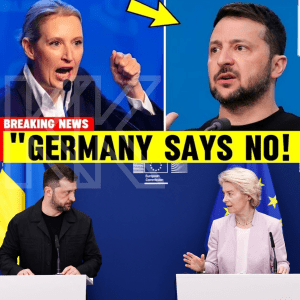
The AfD co-leader delivered a hard-hitting message aimed directly at Ukrainian President Volodymyr Zelenskyy and the German federal government. At the heart of the criticism: billions in financial aid that appear to have vanished into shadowy channels—while calls for ever more advanced weapons for Ukraine continue to grow louder.
The Missing Billions: A Scandal in Plain Sight?
The current debate was triggered by reports suggesting that a significant portion of Western aid funds never reached their intended destinations. Even Zelenskyy himself admitted in an interview with the Associated Press that he does not know exactly where much of the U.S.-provided funding has gone. While Washington speaks of over $200 billion, Kyiv claims to have received only around $75 billion.
For Weidel and many observers in alternative media, the conclusion is clear: this points to a corrupt system enriching itself on Western aid while its own population is being “burned out” on the front lines.
Reports of offshore accounts and misappropriation cast a dark shadow over the transparency of Ukraine’s leadership. The fact that U.S. inspectors are now examining USAID programs for potential misuse of funds only intensifies the controversy.
“Not Our War”: Weidel Rejects Escalation
In her speech, Weidel positioned the AfD as the sole voice of reason and peace. She called for an end to what she described as “escalation rhetoric” and firmly rejected demands for supplying weapons such as the Taurus cruise missile.
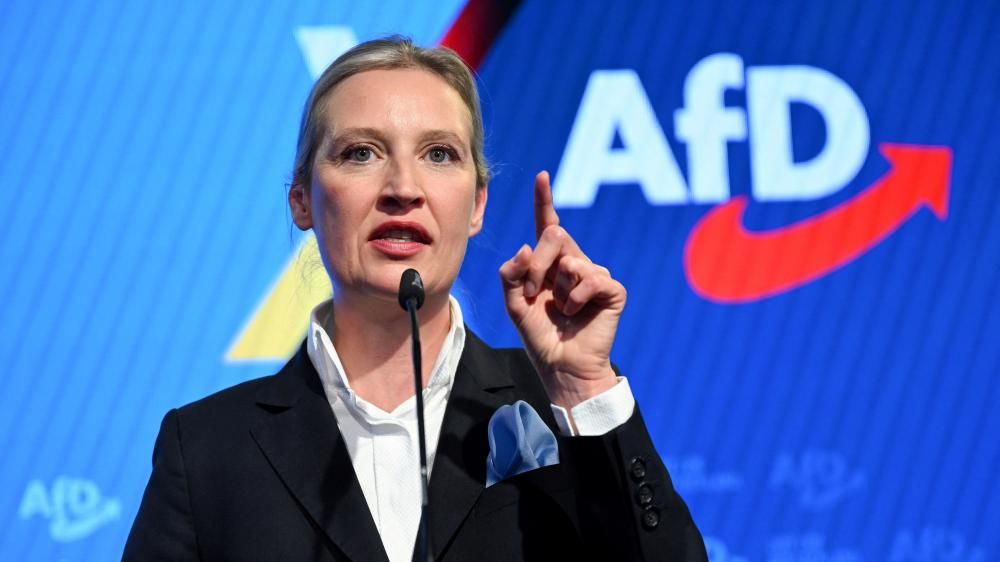
“We do not want missiles sent to Ukraine, we do not want financial aid—and above all, we do not want our fathers and sons to be sent there. This is not our war,” she declared to loud applause.
She also sharply criticized Germany’s role, arguing that the country has abandoned its position as a neutral mediator. Instead of acting as a bridge between Ukraine, Russia, and the United States, she claimed the German government is allowing itself to be driven by foreign interests. Germany, she argued, must return to being a force for genuine peace—through diplomacy, not arms exports.
The Burden on German Taxpayers
A look at the numbers reveals the scale of Germany’s involvement. By October 2024, Germany had already sent €15.7 billion to Ukraine—funds drawn directly from taxpayers. On top of that are substantial contributions to the EU, which in turn channels billions more to Kyiv. Each year, Germany alone contributes around €22 billion to the EU budget.
Critics accuse the government of effectively “diverting” public money into foreign conflicts, while infrastructure and social systems at home continue to deteriorate. The AfD is therefore demanding an immediate halt to these payments until full transparency is achieved regarding how the funds have been used.
Democratic Deficit and Allegations of Misconduct?
Particularly troubling, critics say, is growing war fatigue among the Ukrainian population and reports of forced conscription. Zelenskyy’s legitimacy is also being questioned, as no new elections have been held since last May, with rule continuing under martial law.

Some observers suspect the war is being prolonged deliberately to delay scrutiny of financial irregularities and alleged corruption. Meanwhile, Elon Musk has recently described organizations like USAID as “criminal”—a view echoed within AfD circles. Calls for transparency are no longer just political rhetoric; they raise serious moral and financial questions for donor nations.
Conclusion: A Turning Point Approaches
Weidel’s message serves as a wake-up call to Germany’s political elite. Billions in aid cannot become a bottomless pit where taxpayer money disappears without trace. As long as doubts persist over the integrity of recipients—and the risk of further escalation looms—continuing on the current path may prove reckless.
The AfD promises a fundamental shift: prioritizing national interests and pursuing diplomacy over confrontation. Whether such a course correction comes in time to prevent further financial and human loss remains the critical question looming over Europe’s near future.