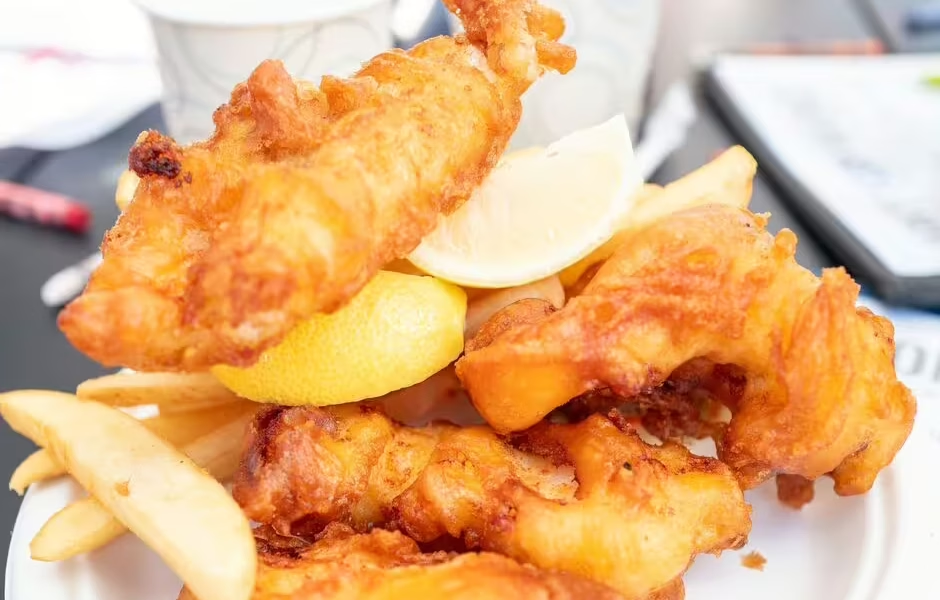
Fish and chips at risk as Labour EU reset subjects food sector to 400 new regulations.T


Chips could be sent to compost under the new EU rules (Image: Getty)
Traditional Fish and Chips could be under threat because of post-Brexit rules being considered by the Labour Government. As part of an agreement with Eurocrats in Brussels, British Ministers are reportedly considering ways to cut red tape and make trading easier for farmers and food producers.
The agreement being considered would slash bureaucracy as part of a drive by the government to “reset” relations with the trading bloc. But industry groups have reportedly been warning that, whilst the move could reduce costs for exporters, it may subject the entire sector to some 400 additional regulations.
One such regulation could see potato chips sent to compost. This is due to the proposals affecting all businesses which would mean that produce already in the soil, grown or frozen and held for sale, may no longer be able to be legally sold.
Speaking to the Times newspaper, Karen Betts, boss of the Food and Drink Federation – a representative body for the sector – said: “If you look at potatoes going into oven chips or crisps, it’s a three-year cycle from planting your potato to it appearing in an oven chip in a supermarket freezer.”
She added: “So if your potato was grown using a pesticide that is not approved by the EU, then potentially, when it gets to supermarket sale in three years’ time, it is not going to be allowed to be sold.”
It was reported that government ministers want to see negotiations on the standards of food and drink, as part of long-running talks that have been going since last May. It is expected that these talks should be wound-up by this summer.
Labour is hoping to bring forward laws that will open the way for the United Kingdom to adopt a wide range of EU laws without subjecting them to a vote in parliament as part of Sir Keir Starmer‘s desire to “reset” relations with Brussels.
Ms Betts told the Times: “When we left the EU food laws didn’t change. But in [aligning closer] with the EU, we’ve identified more than 400 amendments that companies will have to comply with where EU law has changed while UK law has not.”
It is expected that small to medium sized businesses, which characteristically do very little business with the European Union, will also be hit by the changes. Sources told the media that they expect those businesses to be hardest hit, as they are less likely to have kept up with changes to complex Brussels laws.

Potatoes take three years from planting to supermarket sale (Image: Getty)
Ms Betts said that “ultimately [and] strategically” buddying up to the EU on some regulations “is the right thing to do” but wanted that there would need to be a transition period to ensure that those products already in the supply chain could be sold. She warned that if that did not happen there would be vast amounts of food waste.
A government spokesman said: “Our food and drink deal will deliver billions for British industry; a smooth transition is critical to unlocking that growth. The deal will mean fresher food on more supermarket shelves quicker, better export opportunities for our farmers and stronger food security for the future.
“We are working closely with farmers and producers to give them more information on getting ready for new arrangements. We will continue to provide more support once deadlines and processes are clearer.”