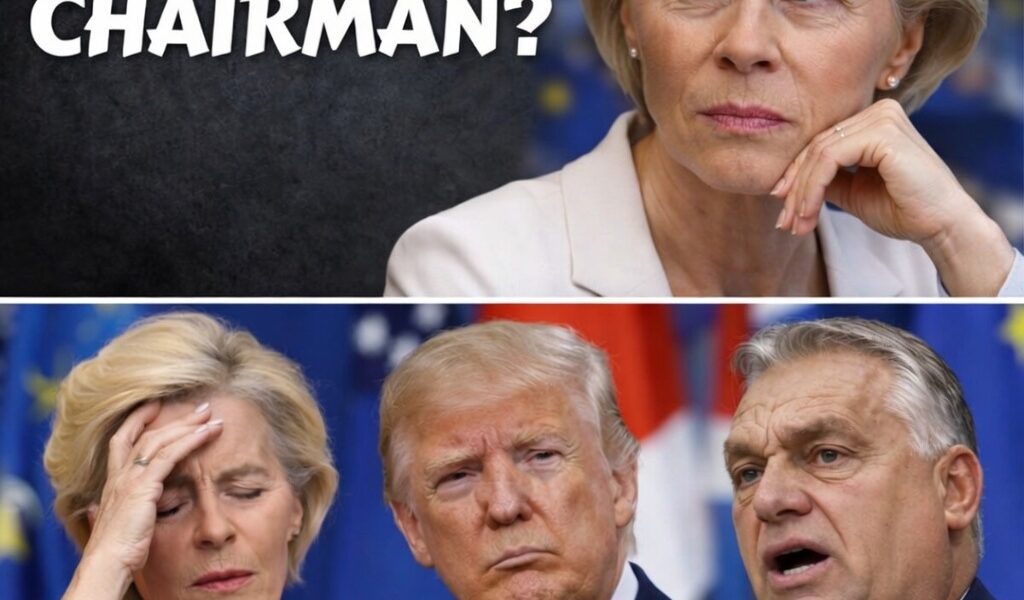
SPEKULATION: Viktor Orbán als möglicher Nachfolger von Ursula von der Leyen an der Spitze der Europäische Kommission … HYN

Budapest/Brussels, April 2026 – Following Viktor Orbán’s surprising election defeat in the Hungarian parliamentary elections, speculations are circulating in Italian media and from Serbian intelligence circles suggesting that the change of power in Budapest could be part of a larger strategic operation.
According to these reports, Orbán is not intended to disappear from the political stage permanently but is being positioned as a potential candidate for the office of President of the European Commission. This would involve replacing Ursula von der Leyen, who currently leads an increasingly fragile majority and has weathered several votes of no confidence.

Von der Leyen is allegedly on shaky ground. Votes of no confidence, internal divisions. Trump and JD Vance are said to be exerting massive influence.
The theory, picked up in Italian press reports, suggests that Orbán’s defeat was deliberately staged or at least utilized to free him up for a higher European function. US President Donald Trump and his Vice President JD Vance are said to play a central role in this.
Although Trump had supported Orbán during the campaign, he praised the winner, Péter Magyar, as a “good man” after the election. Behind the scenes, however, work is reportedly underway on a scenario in which Orbán is to be placed as a “Trojan horse” for the USA at the heart of the EU to fundamentally alter the Commission’s current course.
Ursula von der Leyen has been under pressure for a long time. Several votes of no confidence in the European Parliament have weakened her position, even though she has survived them so far.
Critics accuse her of pushing the Green Deal and associated regulations, such as CO₂ emissions trading, too aggressively, leading to high costs for the European economy. In Germany, a potential change at the top of the EU would have immediate effects on energy prices, taxes, and industry. The free CO₂ certificate trading planned for 2028 could lead to further price spikes in fuel and energy—a development that is already causing significant burdens for consumers and businesses.
For over 16 years, Orbán was considered one of the most prominent critics of a centralized EU policy. He repeatedly blocked decisions regarding migration, sanctions, and energy policy, advocating for national sovereignty. His government maintained cheap energy imports from Russia and warned of the economic consequences of sanctions.
According to observers, an Orbán at the helm of the Commission would signify a radical change of course: a weakening or dismantling of the Green Deal, greater consideration for national interests, and a more pragmatic stance toward third countries.
The speculation is fueled by the stance of Péter Magyar. The election winner called for the Hungarian State President to resign, sending a signal that was received with unease in Brussels. The new Hungarian parliament is strongly characterized by right-wing and far-right forces; classic center parties, such as CDU or SPD equivalents, are hardly represented. Magyar himself has signaled continuity in defending national interests, yet early signals point toward a possible alignment with EU mandates.
Trump and his circle are depicted in Italian reports as the driving force. The USA reportedly has an interest in changing the EU from within and installing a Commission Presidency that is less confrontational toward Washington and more pragmatic in economic matters. Orbán is described as a skillful strategist who even escaped the influence of George Soros’ Open Society Foundation and masters long-term political calculations. His swift and democratic recognition of the election defeat is seen in this context as further evidence of a planned higher role.
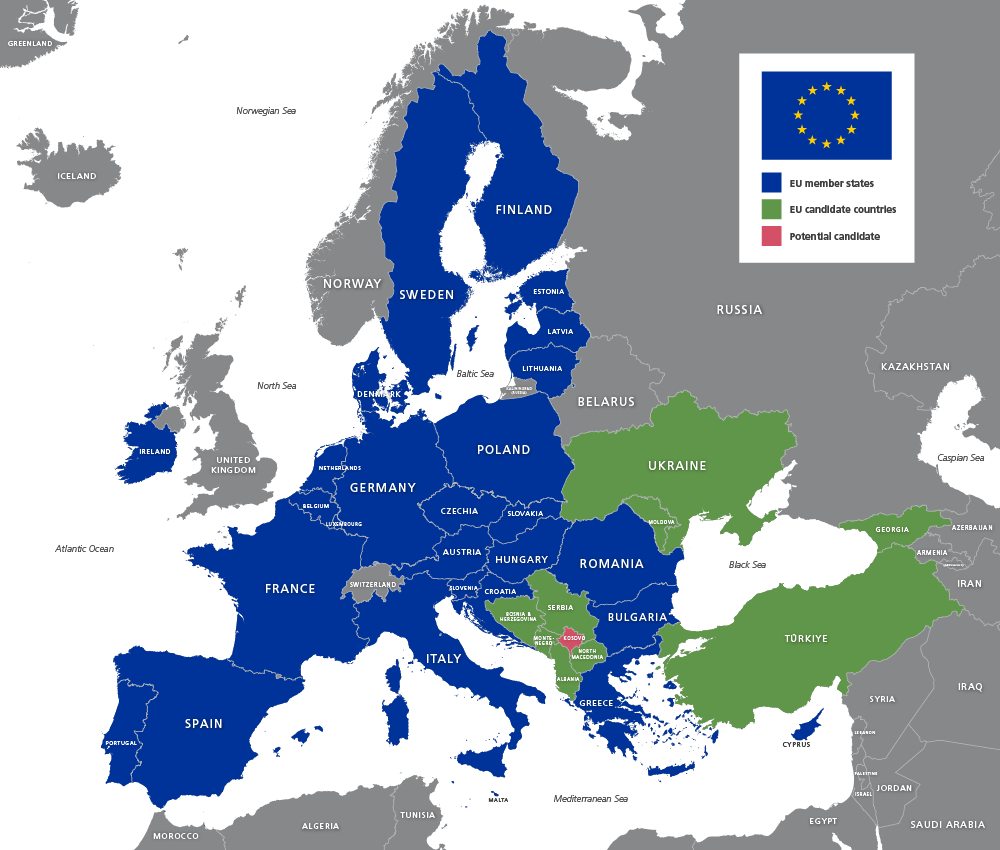
Whether this theory is accurate or merely constitutes conspiracy speculation remains open. The EU Commission Presidency is filled on a rotating basis; the current cycle ends in 2029. A premature replacement of von der Leyen would only be possible through a successful vote of no confidence or a voluntary resignation.
Nevertheless, the speculations show how deep the divisions within the EU have become and how much external actors—above all the USA under Trump—are perceived as attempting to influence European personnel decisions.
For Germany, such a change would have far-reaching consequences. The Green Deal and its associated instruments, such as CO₂ certificate trading, have already led to noticeable costs. A weakening of this policy under an Orbán as Commission President could bring relief to industry and consumers but would simultaneously trigger massive conflicts with the Greens and parts of the “Ampel” (Traffic Light) coalition. The debate over national sovereignty versus European integration would be reignited.
The AfD has repeatedly praised Orbán in the past as a model for sovereignty-oriented politics. Alice Weidel thanked him after the election for his role as a critical voice and pointed out that Orbán was subject to being voted out—unlike the not directly elected von der Leyen. Whether the speculations regarding an Orbán candidacy for the highest EU office are realistic will become clear in the coming months. What is certain, however, is that the Hungarian power shift and the associated international reactions further strain the already tense relations within the European Union.